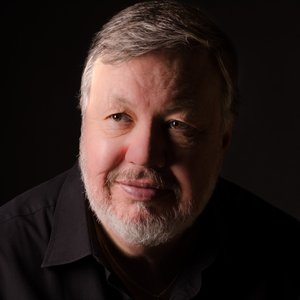
Interview with James Grossmith
The Edinburgh Festival Chorus - 60th Anniversary
An Interview with Chorus Director James Grossmith
In 1965, the Edinburgh Festival Director, Lord Harewood, got together with Sir Alexander Gibson, Music Director of the Scottish National Orchestra, and made a monumental decision. They planned to perform Mahler’s 8th Symphony, ‘The Symphony of a Thousand’, at that year’s Edinburgh International Festival. This huge work, featuring 8 soloists, 2 double choirs, a children’s choir, and a large orchestra with organ, had never been heard in Scotland, and Gibson and Harewood determined to make something special of the performance. Realising the enormous forces needed, they founded the Edinburgh Festival Chorus, and engaged Arthur Oldham to be the first Chorus Director.
Oldham (1926-2003) had studied with Herbert Howells at the Royal College of Music, and had been a pupil and assistant to Benjamin Britten at Aldeburgh between 1945 and 1951. Having converted to Catholicism, he took up the post of choirmaster at St Mary’s Catholic Cathedral in Edinburgh, and it was his success there that brought him to the attention of Gibson and Harewood.
His appointment as Chorus Director of the EFC was an inspired one, and he proceeded over the next few years to create one of the finest amateur choirs in the world.
I wasn’t old enough to hear the Mahler 8, but my acquaintance with the chorus and Arthur Oldham began in 1972, when Daniel Barenboim conducted the LPO with Edith Mathis and Dietrich Fischer-Dieskau in Brahms’ German Requiem. I was still at school at George Watson’s College, in Sixth Year, and I remember that the Requiem was recorded in my old school hall by Deutsche Grammophon. It was the first time I ever heard my idol, Fischer-Dieskau, live, and he was stunning. At the same time, with Barenboim at the piano, he sang the Brahms ‘Vier Ernste Gesänge’- another revelation!
Those were the early glory years for the Festival Chorus, moulded by Oldham into a truly superb unit, stunning audiences with their stirring singing and perfect blending of voices. I’m not sure how much came down to luck in having a great cohort of amateur singers at that time, but it was clear that Arthur Oldham was a genius as a Chorus Director.
Some other extraordinary concerts I heard in the Usher Hall, featuring the Festival Chorus at that time, were the Verdi Requiem in 1974, again with the LPO, this time under Carlo Maria Giulini, and with a quartet of Arroyo, Cossotto, Pavarotti and Arie (the only time I ever heard Pavarotti live), Mahler’s Second Symphony with Leonard Bernstein and the LSO in 1973, with Sheila Armstrong and Janet Baker (perhaps the greatest concert of my life!?) and, in 1976, with the LPO and Giulini, Beethoven’s Missa Solemnis.
This period is etched deep in my heart, as it came at a transformative point in my life, when I was discovering my own voice and being stimulated by performances at the EIF of earth-shattering excellence. The magnificence of the Festival Chorus at the time contributed enormously to that hugely important phase of my life, and remains an abiding memory.
I had several friends who sang in the Chorus then, and that personal touch was also important to me as I emerged blinking into the world of professional music when I moved to London to study at the Guildhall School of Music.
It was not until 1997 that my family and I relocated to Edinburgh, so I lost touch a little with the Chorus, and was somewhat oblivious to the changes in direction that occurred after Arthur Oldham left, to be replaced in 1978 by John Currie. Mr Oldham returned in 1987 until 1994, and then David Jones was Chorus Director until 2007, succeeded by Christopher Bell until 2018. From 2018 until 2023, Aidan Oliver was in charge, by all accounts a period of stunning excellence in the Chorus archive, and that success has been continued under the present direction of James Grossmith.
So in this important year of the 60th anniversary of the Edinburgh Festival Chorus, it is with extreme pleasure that I can now introduce our readers to James Grossmith, with whom I had a very interesting chat recently, and the result of that chat is the following interview.
BBS: James, welcome to the Edinburgh Music Review. I know that preparations are advanced for the Festival Chorus’s contribution to this year’s Edinburgh International Festival. Perhaps you could enlighten us about the various projects the Chorus will be involved in during the three weeks of the Festival?
JG: Thank you—it’s a pleasure to be joining you for this interview. This year is particularly special as we celebrate the 60th anniversary of the Edinburgh Festival Chorus. In light of the many challenges the arts sector continues to face, we’re prouder than ever to be involved in five major projects. We’re opening the Festival with the second UK performance (the first since the première) of Sir John Tavener’s The Veil of the Temple, which is a mammoth and deeply personal and spiritual work. Later in the Festival, we’re performing Puccini’s opera Suor Angelica and Vaughan Williams’ Sea Symphony with the London Symphony Orchestra under Sir Antonio Pappano, which promises to be another highlight. We perform Leonard Bernstein’s thrilling Chichester Psalms with the BBC Scottish Symphony Orchestra, and then Mendelssohn’s rich and dramatic oratorio Elijah with the Royal Scottish National Orchestra. Attached to the performance of Elijah is a Come & Sing where anyone can sign up to come and learn some of the great choruses of Elijah in a giant chorus, with a performance at the end of the day with Thomas Søndergård and the Royal Scottish National Orchestra and soloists from the Edinburgh Festival’s Rising Stars Programme. It’s a rich and varied programme that really showcases the versatility and commitment of our wonderful chorus singers.
BBS: I know this year’s Festival has been affected by financial constraints beyond your control, but will the Chorus be as busy as usual this year? Do you still get as much rehearsal time as you would like?
JG: The financial pressures are real, and they’ve certainly required us to be more strategic in our planning. That said, we’ve managed to maintain our usual rehearsal preparation thanks to the support of the Festival team. Rehearsal time is always a balancing act, but we’ve worked hard to ensure that the Chorus is fully prepared and confident going into each performance. The rehearsal evolves every year in line with the demands of the repertoire which we face. The slow-burn nature of the preparation which continues throughout the year on all of the repertoire we are preparing, with all performance being given in an intensive burst every August, is one of the unique parts of the experience for a Festival Chorister, and critically important to maintaining the high standards expected of us; the time to really inhabit and take ownership of a great choral work.
BBS: Back in the early years, I know that the Chorus had groups from both Edinburgh and Glasgow (and possibly Aberdeen?), who got together in the run-up to the Festival to form the full chorus. Is that still the same? I have been told that you also have a group of semi-professional singers who can augment the amateur choir when and if needed. Is that still the case? I am aware from my own professional work as a concert soloist that choral societies are finding it ever harder these days to find good male voices. Is this now a serious problem?
JG: The Chorus has evolved over the decades, but it still draws singers from across Scotland and beyond. We no longer have all of the formal satellite groups, but many of our members travel considerable distances to be part of the Chorus and the Glasgow group is still a thriving entity in itself! We do maintain a small pool of professional singers who can be called upon when needed, particularly for works that require a larger or more technically demanding ensemble. As for male voices—yes, it’s a challenge. Recruitment of tenors and basses is a widespread issue in the choral world, but we’re proactive in our outreach and auditions, and we’ve been fortunate to attract some excellent new singers in recent years. All of our new singers benefit very quickly from the more experienced members of the chorus who have an astonishing knowledge of the repertoire learnt over many years with the greatest conductors.
BBS: You have spent a good part of your career working as Chorus Master to professional opera companies, notably Scottish Opera (2005-2014) and the Royal Swedish Opera (2014-2023). How have you brought that experience to bear on your more recent work with the EFC? A professional opera chorus is clearly a completely different beast from a large amateur chorus. What are those differences and how have you dealt with them?
JG: That’s a really good question. Working with professional opera choruses taught me a lot about precision, stamina, memory, language work, how to sing really well with an orchestra and the importance of musical character. With the EFC, I’ve tried to bring that same level of discipline and attention to detail, while also being sensitive to the fact that our singers are volunteers with day jobs and families. The key is to create a rehearsal environment in which I demand the same level of detail that I would from professional singers, but am extra supportive to help to find a way to achieve that. I think amateur singers are capable of extraordinary things when they’re inspired and well-prepared, and the EFC has consistently proven that over the past sixty years and risen to the challenges.
BBS: Can you tell us a little about your early career, and how that has influenced your way of working nowadays? This might be a good moment to relate to the very distinguished inheritance you are now part of, as the sixth incumbent of the role of Festival Chorus Director. Are you conscious of upholding a famous tradition, or is it important to see yourself as perhaps more of an innovator? Or are both options possible, in this modern era of financial cuts and the search for greater diversity?
JG: I was lucky enough to win a scholarship to a school with a rich music tradition as a teenager and immersed myself to the full in church music, as a conductor, a singer and an organist. As a pianist and viola player I got enormous experience from playing in orchestras, in chamber ensembles, eventually stepping on to the podium. Opera came later, when I studied as organ scholar of Clare College, Cambridge, and was a wonderful liberating counterpart to the rigorous discipline of the world of church music. A period teaching music after university, winning over initially sceptical teenagers to the joy of music-making, provided me with a skillset that is invaluable to a choral director. Work in tertiary education came later in Scotland, both with the choirs at the then RSAMD and the Chapel Choir of the University of Glasgow, whom I directed for ten wonderful years. I studied conducting in Glasgow with Martyn Brabbins, who was working in Scotland extensively at that time, and his relationship with the BBCSSO gave student conductors excellent access to watch all of the conductors who worked with the orchestra at the time in great detail, to follow their rehearsals and their working methods and hear and compare the results. From Martyn and the Russian tradition in which he was schooled, I learnt better focus in my gestures, more clarity, more stillness and not to be afraid of really showing character in my phrasing. I am a supportive and positive type in my rehearsal work, but I have also witnessed exceptional results from conductors who work with more critical and negative energy and create a somewhat fearful atmosphere amongst their musicians. Each of us make our choices as to how we wish to work, and who we wish to be in our professional lives.
I do feel a responsibility to uphold the Chorus’s reputation for excellence, but I also believe we must evolve. Being part of the EFC’s legacy is a huge honour—following in the footsteps of the now legendary Arthur Oldham and all of the distinguished directors who have followed him is both humbling and inspiring. I know all of my three predecessors, and am looking forward to seeing them all at the end of this year’s festival for the celebration of the 60th anniversary. The 61st festival for the chorus? Well that’s under wraps as yet, but it will certainly be breaking new ground!
BBS: Your job as Chorus Director of the EFC is very different to any other such role, as you are responsible for 4-6 concerts, often of a hugely varied nature, which take place over a very short period in August. The preparation for these concerts covers an enormous period of almost a year. How on earth do you do it? And to such a high standard? I presume members are auditioned for quality of voice and ability to read music. What are the demands on the singers?
JG: It’s more of a marathon than a sprint. The preparation planning has to respond to the repertoire each year. We begin preparing repertoire as many as ten months in advance, often rehearsing pieces in rotation so that nothing is neglected, but also so that we can build up our knowledge of works slowly and fully; this also includes building stamina and technique to overcome particular challenges whilst taking proper care of everyone’s voice. This long lead in to the performances is a unique aspect of the way we work. The singers are auditioned every two years, and we look for strong musicianship, voices of quality, and the ability to pick up music quickly. Every member improves their reading in due course by the nature of what we do, but aural ability is equally important at auditions. The demands are high—there’s a lot of music to absorb, and the Festival period itself is intense, but the singers rise to the challenge year after year. Their commitment is genuinely the reason we are here, and I think the high standard we achieve is a testament to that dedication.
BBS: You have recently returned to the UK, settling in Northern Ireland, where you are Chorus Director of the Belfast Philharmonic Choir, and work with Northern Ireland Opera as coach and guest conductor. Combined with the Festival Chorus job, your time must be pretty full, but I imagine the chance to be based largely in one place is very fulfilling. Do you still have further ambitions as a Chorus Director, or are you settled for good now?
JG: It’s true that my schedule is fairly full, but I feel very fortunate to be working with two such wonderful organisations, both extremely vibrant, but different in their characters and remits. Being based in Northern Ireland has given our family a wonderful sense of balance, having lived abroad for many years, and I’m enjoying the opportunity to contribute to the musical life there. As for ambitions—I think any artist is always looking to explore new challenges, as it is what keeps us on our game. I’m always open to new opportunities, but I’m also very happy with the work I’m doing now. It’s about making music with dedicated people, wherever that may be, and working to enable them to give their very best in performance but also to have a rich rehearsal life. Let’s not forget that the majority of a musical ensemble’s life is in rehearsal, and the quality of that rehearsal experience is really important to sustaining success, wherever one works.
BBS: as the Festival rapidly approaches, can you tell us something about the extraordinary event in which the Chorus is involved, John Tavener’s ‘The Veil of the Temple’. At eight hours length, I am afraid I chickened out of reviewing it, as I am plagued by a bad back, but it promises certainly to be a talking point. What’s it about and what are the forces necessary? Why is it so long? I sang a piece by Tavener myself some 30 years ago in St Paul’s Cathedral with the composer present, and found the work interesting but repetitive. Are you looking forward to it?
JG:The Veil of the Temple is unlike anything else in the choral repertoire. It’s a spiritual journey, drawing on texts from Christianity, Islam, Hinduism, and Judaism, and it’s designed to be experienced overnight, culminating at dawn. We will create this sense of an overnight journey during the day for the first time, drawing on the effects of lighting and simple staging to clarify the progression of the piece. The forces involved are vast—multiple choirs, soloists, instrumentalists, and spatial effects. Yes, it’s long, and yes, it can feel meditative or repetitive at times, but that’s actually the power of it. It invites the listener into a different kind of time and space. The effects of the ravishing beautiful or extremely dramatic moments in the work are all the stronger for their place within an extended and repeating ritual where expectations are built up and then subtly altered or even shattered at points. I’m genuinely excited about it—it’s a very bold choice for the Festival and a truly forward-looking way to mark the Chorus’s 60th anniversary.
BBS: I see you are Chorus Director for Puccini’s ‘Suor Angelica’ with the LSO and Pappano. Have you worked with Tony before? I sang Bartolo in ‘Le Nozze di Figaro’ with him at the Monnaie in Brussels 25 years ago, and again in ‘Die Meistersinger’ at Covent Garden in 2017. I think he’s a terrific conductor. Sadly, I shall miss that performance as my own event, Afternoon Arias, takes place at 2.30pm on the same day at the New Town Church. The public will be able to attend both, but I have a reception after my concert which will coincide with your starting time of 7pm.
JG: Tony is indeed a remarkable conductor—his energy, musicality, and deep understanding of the operatic repertoire are exceptional. This will be my first time working with him, and I’m very much looking forward to it. I have enjoyed meeting him and discussing both this and the performance of Vaughan Williams’ Sea Symphony which we will also perform with him and the LSO. Suor Angelica is a deceptively simple piece, but it requires great sensitivity and control from the chorus, with a huge amount of character work and sudden shifts of mood and colour, not to mention a lot of tricky and unusual Italian text. I’m sorry you’ll miss it, as it will be a highlight, for sure. Sea Symphony is a work that the chorus have performed before, and having heard Tony’s performance with the LSO and LSC in London earlier this year, I know that our chorus are in for a great experience.
BBS: finally, what are your hopes and aspirations for the Edinburgh Festival Chorus as it moves beyond its 60th anniversary? Can it survive in its present form, and if so, what works would you like to be involved in?
JG: As we move beyond the 60th anniversary of the Edinburgh Festival Chorus, my hopes and aspirations are rooted in our tradition and story, but also with an eye to evolving, adapting and responding to our difficult changing times. The Chorus has long been a cornerstone of the Edinburgh International Festival’s musical identity as their only full-time in-house ensemble, and I believe it absolutely can—and must—survive in its present form, provided we continue to nurture its artistic excellence and our members’ spirit of cohesion for the future.
Looking ahead, I’d love to see the Chorus engage with an ever-broadening and more diverse repertoire. Whilst the great choral masterworks will always have a place—pieces like Mahler’s Symphony No. 2, Britten’s War Requiem, or Beethoven’s Missa Solemnis—I’m equally excited by the prospect of commissioning new works and collaborating with contemporary composers. These projects not only challenge and invigorate the Chorus artistically but also ensure its relevance to new generations of audiences and singers. Thanks to the visionary leadership of our current Director, Nicola Benedetti, who has really lain down the gauntlet with The Buddha Passion and The Veil of the Temple, new works have become a regular feature of the chorus’s repertoire and the years to come will be no exception!
Sustainability is also key—not just in terms of funding and logistics, but in fostering a culture of inclusion, accessibility, and artistic ambition. I want the Chorus to continue to be a group in which amateur and professional musicians can come together to create something truly extraordinary, well beyond the sum of its parts, year after year.
Ultimately, my aspiration is for the Edinburgh Festival Chorus to remain a beacon of choral excellence, innovation, and community—one that reflects the spirit of the Festival itself.