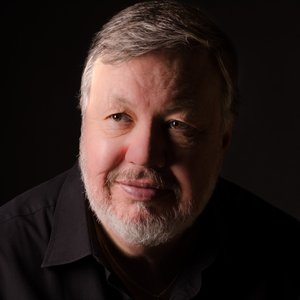
Cedric Thorpe Davie
Cedric Thorpe Davie
Orchestral Music, Volume one, Toccata Classics
St Andrews Chamber Orchestra, Bede Williams, conductor
It was a great pleasure to be invited, along with my wife, to the launch of a new CD featuring the orchestral music of Professor Cedric Thorpe Davie in the Laidlaw Music Centre in St Andrews University. This is the first part of a project which has been long in the planning, and which is designed to allow the world to hear, for the first time on record, some of the works of one of Scotland’s foremost composers of the middle of the 20th Century. The fact that we knew him - he was my wife Fran’s professor when she was studying music at St Andrews from 1974-1978, and I was a singer in the Chapel Choir, which he conducted, at the same time - makes this project all the more interesting.
It’s also a source of great frustration that we rather looked upon Cedric as a figure of fun to some extent, a dry old academic (mind you, I now realise that when I first went to St Andrews, he was only 60, ten years younger than I am now!), a past composer of film scores and not much else, and an uninspiring choral conductor. I now realise that he was a really interesting and hugely talented composer, who was a close friend of Gerald Finzi, and who had met Sibelius in Finland. What’s more, I have found out that his father, Thorpe Davie, had started out as a singer in the early years of the 20th century, and had studied with Jean de Reske, one of the greatest singers of all time, who had sung all the great Wagnerian roles in the decade after Wagner died, as well as several roles composed for him by Massenet, and Otello and Radames in Verdi’s presence. I would have loved to have asked Cedric questions about so many of these, and yet was ignorant of his story.
He was also the composer of the music for the famous production of Sir David Lindsay’s ‘Ane Satyre of the Thrie Estaites’, a ground breaking in-the-round production by Tyrone Guthrie, premiered at the 2nd Edinburgh Festival in 1948 in the Assembly Hall of the Church of Scotland above the Mound, a production that was revived many times, including in 1982, with me as Fund-Jennet, a comic singing role, when we toured the play to Warsaw in Poland.
Since his death in 1983, CTD (as I will refer to him) himself has dropped far under the radar, a composer of tonal and listenable music in an era of atonal experiment. At his peak, writing serious music as well as excellent film and theatre scores, much of his output was forgotten and dismissed. William Glock, BBC Controller of Music from 1959-1972, practically banned all new tonal music from the BBC at that time, believing it to be a prehistoric anomaly.
This CD, released by the always excellent Toccata Classics, was recorded in the McPherson Room of the Laidlaw Music Centre in St Andrews in March of this year, and will be available soon. It features the St Andrews Chamber Orchestra, a body founded in 1945 by CTD when he took up the post of Master of Music at the University, conducted by Bede Williams, one of the important figures in this story: trumpet player, Deputy Director of Music and Senior Lecturer at the University. The orchestra’s quasi-amateur status should not put any listener off, as the result is very fine indeed, and bears comparison with many fully professional chamber orchestras.
The CD starts with Festal Overture, a grand work commissioned in 1950 to open the inaugural concerts of the recently renamed Scottish National Orchestra. Founded in 1891, the Scottish Orchestra became a professional, full-time body in 1950, as part of the post-war artistic revival in Scotland, and with a swanky new title, it needed a crackerjack piece to open the season, and with the Festal Overture, it certainly got that. Soon to reach new heights under Alexander Gibson, who became principal conductor in 1959, remaining in post until 1984, it has now become the Royal Scottish National Orchestra, and I have the privilege of reviewing all of its Usher Hall performances for the EMR.
There is a very Scottish feel about the overture, with hints of folk songs and memories of ceilidhs in the background, but it’s also a thrilling piece of theatrical sounding music, catching the mood of a country emerging from the grim years of war, and establishing its own individual sound. CTD’s early training as a horn player lends his brass music an air of certainty and panache, and the great triumphal climax of the work rings out with clarity and confidence.
Next we hear his only symphony, the Symphony in C Major from 1945, when CTD won second prize in a bizarre competition organised by the Daily Express (really!) to find a new British symphony, again as part of the artistic renewal after the war. Apparently, Lord Beaverbrook, who owned the Daily Express, was being driven past the Albert Hall in London, and saw huge crowds gathering outside. Assuming it was an audience for a boxing match, he inquired as to the reason for the throng, and was astonished to hear that it was for a classical concert. Wishing to tap into a growing readership, he at once decided to organise a competition to find a new symphony, and got famous people like Malcolm Sargent, Arthur Bliss and Constant Lambert to judge it, with the prize of a series of concerts as motivation. CTD won second prize (First Prize - Bernard Stevens – who he?) and was rewarded with a performance in 1946 at the Albert Hall by the London Philharmonic Orchestra conducted by Constant Lambert, and further concerts by the Hallé Orchestra under Sir John Barbirolli.
The symphony launches in with a flourish of timpani and trombones, gradually gaining momentum. The Adagio second movement evolves over two pedal notes, first on E then on C Sharp, with a definite modal feel, and leads into a jolly, jaunty finale, full of spirit and joie de vivre, picking up on the national mood of relief and victory. It’s a terrific piece, and fully deserves to be heard again, after years of obscurity. No longer seen as an anachronism, the symphony fits well with CTD’s plea for “music which actually gives pleasure to the performers and to the audience, rather than by contributing to ‘esoteric’ repertoires for a narrow specialist audience!” Amen to that!
The central section of the CD is given over to ‘Diversions on a Tune of Dr Arne,’ a Commission by the National Youth Orchestra of Great Britain, premiered in 1954, again at the Albert Hall, in a BBC Prom Concert conducted by Sir Adrian Boult. Thomas Arne was an 18th century composer, whose most famous work was ‘Rule Britannia’, and the tune to spark the variations and diversions was from his opera, ‘Thomas and Sally’ from 1760.
CTD wrote 9 variations on the Arne tune, and what a collection they were! A graceful dialogue between the sections of the orchestra starts things off, an Allegretto Grazioso, rising to a big tutti before a tragic variation takes over. This leads into a pastoral episode of gentle elegance, followed by a more rhythmic one-in-a-bar briskness. An adagio follows, a deeply moving string melody over lower brass and woodwind, suggesting an emotional involvement more than just another variation. A sunny Spanish flavour is introduced with trumpets and percussion, and then we are swept along in a march rhythm. A graceful oboe allows a moment of quiet contemplation, before we are transported to Scotland for some jigs and reels leading into a final triumphant fugue.
CTD wrote the incidental music for a Stratford production of King Lear, directed by John Gielgud in 1950, and we hear the moment when Lear comes in with the body of Cordelia. Originally scored for violin, 2 violas and 2 cellos, it was rearranged for string orchestra the same year, and it is a fine example of the composer’s mastery of string writing.
The final work on the CD is Fantasia No.1 on Four Scottish Tunes, written in 1937, when CTD was studying at the Royal College of Music with Vaughan Williams, and was first broadcast on the BBC in 1938 and played later that year in Glasgow by the Scottish Orchestra, conducted by the great George Szell. It’s a fitting finale for the disc as it ties in CTD’s Scottish background with his studies in London and in Europe.
Bede Williams and the St Andrews Chamber Orchestra are to be congratulated for the excellence of the performances on this CD. Toccata Classics’ Martin Anderson was crucial to the project as was Alan Munro (a student, like my wife, of Cedric’s in the 1970’s) for bringing this first volume to fruition. I look forward to further CDs in the future.
Cedric Thorpe Davie - Orchestral Music - Volume 1 is released on October 2nd 2026, and can be found on online retailers and distributors around the world – details on www.toccataclassics.com