Edinburgh International Festival 2026
Edinburgh Festival Launch
The EMR publishes here three reflections by our reviewers on the new Edinburgh International Festival programme.
Preliminary thoughts on the themes, the operas and the Queen’s Hall concerts – Hugh Kerr
The 2026 Edinburgh International Festival launch press conference took place on Tuesday March 4th at the Hub, with the news was embargoed until March 11th. The press release highlighted that the major theme of the Festival was to celebrate 250 years of American Independence and would “showcase the largest ever representation of American artists and explore themes of freedom, ingenuity, prejudice and hypocrisy alongside the creative achievements made possible by the friction and energy of its “cultural melting point”. Unfortunately for the festival US president Trump launched the war against Iran 3 days before the press conference! I did briefly chat to Nicola Benedetti after the launch and said, “Of course you couldn’t predict the war, but surely you could have predicted Trump!“ She answered that the theme was planned well before the election and in any case American isn’t Trump! This is of course true but I think it will appear a little incongruous that the Festival is celebrating America at a time when it is under the control of a president who is a convicted felon, a misogynist, a rapist, and currently actively engaged in undermining the cultural life of America at home and abroad. At a time when many American cultural figures are actively boycotting his renamed Trump Kennedy Centre in Washington, we are celebrating the US in Scotland.
This takes me to the question of the programme overall. A friend had asked before the press launch, “Will there be any time for questions?” They were told – I assure you in good humour - “No we would just have Hugh Kerr complaining that there isn’t enough opera and a lack of Scottish music”! I have been attending festival press launches for many years and it’s true that I do consistently raise questions relevant to the festival programme. After all it does involve the expenditure of several million pounds of public money, and, as I always remind festival directors, is not only meant to bring cultural programmes from overseas to Edinburgh but “to showcase the best of Scottish culture to the world”.
So does this programme deliver on both counts? Last year I did complain about the lack of opera with only two concert performances of operas but was promised much more this year. It’s true that there are four operas this year, but two are concert performances - one of ‘Don Giovanni’ with Maxim Emelyanychev conducting the SCO with a decent cast, and the second Karina Cannellakis conducting the BBC Scottish in Strauss’s ‘Elektra’, both at the Usher Hall. The stage operas are Zurich Opera’s production of Verdi’s ‘Masked Ball’, which is set in the “Gilded Age“ of 19th century America, so I guess it fits the festival theme, even though it got mixed reviews in Zurich. It’s good to see Scottish Opera being given a central place in the festival with a new work ‘The Galloping Cure’, an opera – described as a ‘bold allegory’ about opioid addiction. It doesn’t sound a barrel of laughs and Missy Mazzoli’s modern music may not appeal to all, but her ‘Breaking The Waves’ received good reviews in 2019, and we wait with hopeful anticipation. Overall though, it’s still a thin opera programme, compared to the days of Brian Macmaster, but I do acknowledge that opera is an expensive art form at a time of constrained budgets. The words of the Guardian’s opera critic return to me from some years ago, “I’m afraid that the Edinburgh Festival can no longer count itself in the frontline as far as opera is concerned!”
As far as Scottish composers are concerned, there is little in the programme apart for one or two concerts of traditional music at the hub. Surely Scottish traditional music should have a major place in a Scottish festival. I know we have Celtic Connections in January but there must be room for a traditional stream in Edinburgh in August. Also it’s great to see wonderful orchestras from abroad, such as the Berlin Philharmonic, the Los Angeles Philharmonic and the Montreal, but maybe Scotland’s fine orchestras deserve more than the occasional appearance they get in this programme.
Queen’s Hall concerts – Hugh Kerr
In many ways the twenty concerts in the Queens Hall are one of the cornerstones of the Festival. Despite limitations of sight and uncomfortable seats, the Queens Hall has a warm acoustic and gets the Festival into action every day, apart from Sunday mornings. This year it offers some rare musical treats, not least the Festival debut of the great Scottish mezzo, Beth Taylor, whom the Edinburgh Music Review has been promoting for some years as the finest recent new singer from Scotland, now very much an international star. The Queens Hall series opens with the Dunedin Consort led by John Butt, firm Festival favourites; however here they are performing a new work co-commissioned by the Festival, The Barbican and the Dunedin by English composer, Tansey Davies, ‘The Passion of Mary Magdalene’. Ms Davies is a modern composer and says her music is influenced by avant-garde, funk, experimental rock, disco, bebop and modernism. This is not normally what we associate the Dunedin with and again with an 80- minute straight through performance I wonder whether it’s the right thing to open the Queens Hall series?
However there are many other good concerts in the Queens Hall, including the American tenor, Lawrence Brownlee, who delighted us all at his last festival concert when he added – on request- some sparkling Donizetti to an otherwise slightly lack-lustre collection of Lieder, not quite suited to his voice. This time he is performing some poems by black Americans from the Harlem Renaissance - but also including some Donizetti! - maybe he remembers his last visit. It’s also good to see young Scottish guitarist Sean Shibe making his Festival debut playing some Spanish and British music; Donal Hurley of the Edinburgh Music Review recently favourably reviewed him with the Dunedin Consort at the Conservatoire, clearly a young musician to watch. Also good to see an Edinburgh University Music School graduate, Louise Alder, appear as mentor and guest singer to the Rising Stars of Voice, along with pianist and mentor, James Baillieu. I remember Louise well at those wonderful lunchtime concerts at The Reid Concert Hall at the University (sadly largely missing now). I predicted that she would be a star of the future and she hasn’t disappointed.
Another Scottish musician, pianist Steven Osborne, who started as a pupil at St Mary’s Music School in Edinburgh, features in a tribute to Alfred Brendel, along with two other fine pianists, Paul Lewis and Pierre-Laurent Aimard. Brendel was of course a regular visitor to the Festival. I well remember his final concert in 2008. I was sitting in the front row very near to Brendel. During the interval I said to a musical friend, “I’m sure I could hear someone humming”. He laughed and replied that it was Brendel, who was well known for humming along to his recitals! Something maybe best not repeated by our three pianists.
There are many other fine concerts in the Queens Hall series. It’s a great pity that they won’t be available live on Radio 3 as they used to be. The BBC will be recording them for later broadcast, but it’s not the same as live broadcasts. Prices for tickets in the Queens Hall have gone up as in other concerts, but they have introduced £10 ‘give it a go’ tickets, in addition to other concessionary tickets for young people and disabled people.
EIF 2026 Launch – Music and Theatre – Kate Calder
The 2026 Edinburgh International Festival has the most exciting programme in Nicola Benedetti’s four-year tenure as Festival Director. Its theme is ‘All Rise’, the title of the Wynton Marsalis Symphony which forms the opening concert; it celebrates many styles of American music and hosts the festival’s largest ever representation of American artists to mark the 250th Anniversary of US Independence. Although, as the director ruefully admits, the programme was in preparation before the current President was elected, and there may be little to celebrate currently, the theme inspires imaginative programming. There are omissions which I’ll mention later, but, looking at the calendar, I’ve found 10 days in the first two weeks in which I want to go to two concerts - that represents for me a worthwhile Festival!
Three North American orchestras have residencies. The first is Jazz at Lincoln Center Orchestra, of which Wynton Marsalis has been artistic director for 40 years. (To avoid anyone sharing my confusion, this 15-strong ensemble is the usual size for a jazz big band.) They perform with the RSNO, the Festival Chorus and US vocal ensemble, the Jason Max Ferdinand Singers in Marsalis’s 12 movement Symphony No 1 written in 1999. With 200 performers on stage, this should be a memorable start to the Festival. In their second concert the JLCO play Duke Ellington’s 1942 ‘Black, Brown and Beige’, and in their third collaborate with pianist Yuja Wang in a selection of pieces chosen by Wang and Marsalis.
Gustavo Dudamel, no stranger to the EIF, conducts the LA Phil in two concerts in the second weekend, where he contrasts Beethoven Symphonies No 6 and No 7 with recent works, the UK premiere of Gabriela Ortiz’ celebration of Mexican feminism, ‘Revolución diamantina’ (Glitter Revolution) and Thomas Adès’ ‘Inferno’, an LA Phil commissioned tribute to Dante’s poem.
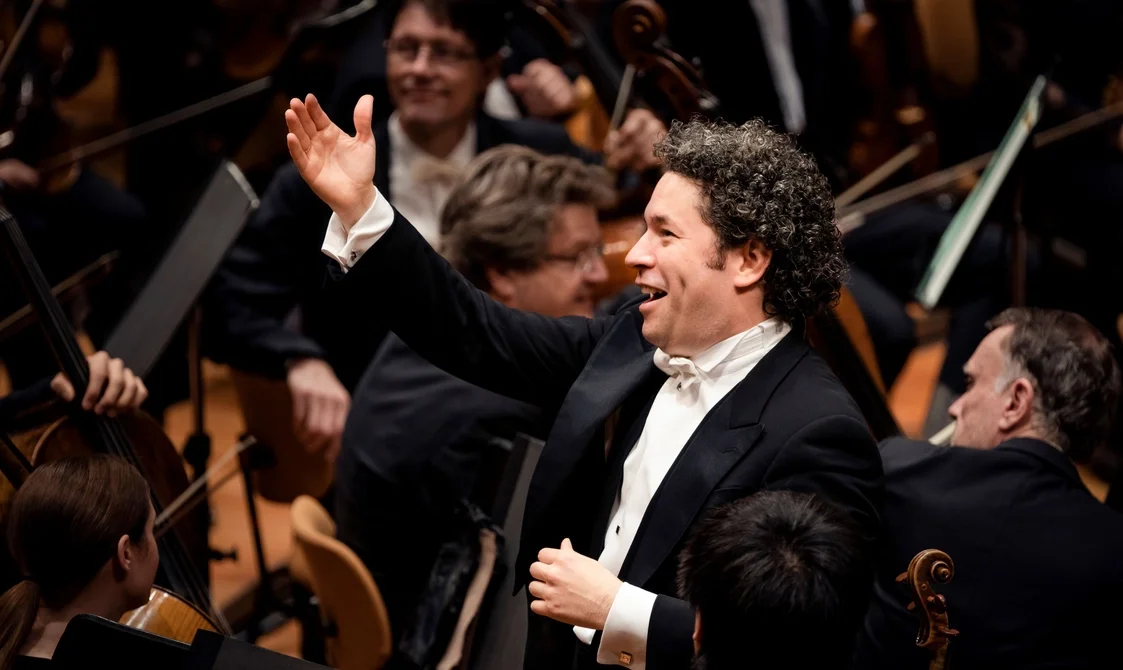
Gustavo Dudamel/ LA Phil Residency Photo credit: Stephane Rabold
Regular readers of the EMR may understand my delight that the Orchestra Symphonique de Montréal is performing, with the Edinburgh Festival chorus, Samuel Coleridge-Taylor’s ‘The Song of Hiawatha’. Despite the rediscovery of orchestral and chamber music by the mixed-race British composer in recent years, his spectacular three-part choral cantata which follows Longfellow’s 1840 poem in celebrating the lives of Hiawatha and his Ojibwe tribe, is rarely played – or even mentioned - today, although 100 years ago massed choirs sang it annually in the Royal Albert Hall. In their second concert, the orchestra plays two modern vocal works, which also reference Canada’s indigenous peoples. Both concerts are conducted by Rafael Payare.
The Festival Chorus return with conductor Sofi Jeannin and this year’s Rising Stars of Voice for American songs from the 20th and 21st centuries, while in two concerts John Wilson conducts his Sinfonia of London in their EIF debut in ‘The Golden Age of Hollywood’. Wilson has spent 30 years recreating the orchestrations of masterpieces by George Gershwin, Cole Porter and Irving Berlin, and this is for me another unmissable event. The National Youth Orchestra of America makes a welcome return with Gershwin’s Piano Concerto, and US minimalist Steve Reich gets a special concert from the Colin Currie Ensemble.
In other Usher Hall concerts, brass musicians from Scottish orchestras, bands and ensembles pay tribute to the late trumpeter, John Wallace, in ‘Brass Fanfare’. I was at the 2023 Wallace Collection concert in Stockbridge Church which Hugh Kerr reviewed: The Wallace Collection — Edinburgh Music Review My fellow Fifer never forgot his roots in the Tullis Russell Mills Band, and the concert includes excerpts from his ‘Symphony’: ‘Methilhill Scherzo’ and ‘Dunsire Street Rag’.
‘Bach to Bach’ is a day celebrating the composer, beginning with a free singing workshop on chorales from the Matthew and John Passions. Alisa Weiler Stein plays the Cello Suites and Víkingur Olafsson plays keyboard pieces by Bach, Schubert and Beethoven. Jordi Savall brings Hespérion XXI and La Capella Reial de Catalunya for a programme entitled ‘A Sea of Music’ which connects musical influences from Europe, Africa and the Americas.
Donald Runnicles returns with the Festival Chorus and the BBC SSO in Schubert’s Unfinished Symphony and Mahler’s ‘Das klagende Lied’ with Catriona Morison among the soloists. And there is still limited availability for the Berlin Philharmonic residency at the end of the Festival, playing Elgar and Tchaikovsky in their first concert and in the EIF’s closing concert Beethoven’s Violin Concerto and Scriabin’s Symphony no 3, whose last movement, Nicola Benedetti says, provides a wonderful end to this Festival.
In the Drama programme, several works reflect the American theme. The most interesting offering, and a test of the newly re-opened King’s Theatre seating, is Tony Kushner’s 1992 ‘Angels in America’. In Ivo van Hove’s direction of the Internationaal Theater Amsterdam, it runs for a Götterdämmerung-length five hours (with 45 minute interval, which should test the new café.) I look forward to this fascinating opening for a favourite theatre, which – please note – only marketing people call ‘The Old Lady of Leven Street’. Also at the King’s is the European premiere of US theatre-maker Geoff Sobelle’s ‘Clown Show’, a contemporary portrait of America as a falling apart circus.
The Lyceum hosts the European premiere of Zora Howard’s ‘Hang Time’, an hour-long subversive perspective on racialised violence, in which three men hanging from a tree share memories. ‘Four Walls and a Roof’ by Lina Majdalanie and Rabih Mroué at the Festival Studio Theatre is a documentary reflection on free speech which links the authors’ recent emigration from Beirut to Berlin with Bertolt Brecht’s 1933 flight from Berlin. He settled in Southern California during the Second World War where he made friends with Charles Laughton and wrote a poem about him. But he was followed by the FBI and was brought up before the House Un-American Activities Committee in 1947.
Last year’s EIF saw the lowest audience figures since the tented 2021 festival – 111,000 tickets sold, with a third of these coming from the sold-out performances of ‘Make it Happen’ and ‘Mary Queen of Scots’ at the Festival Theatre and ‘Orpheus and Eurydice’ at the Playhouse. Hence, I think, the early sale of Berlin Philharmonic tickets and other guaranteed money-spinners to boost the coffers. So it’s good to see that the director has not played it safe this year: there are challenging and rare works here as well as more popular events.
However, there’s admittedly a lack of nineteenth and twentieth century orchestral works and classical British, European and US drama. I note too that, apart from ‘Angels in America’, all the EIF’s plays are in one act. This has become standard practice on the Fringe, and I’m sorry to see that the Festival does not have room for longer works. And with the Usher Hall lying unused for five nights, further appearances by Scotland’s three orchestras (all on top form) and amateur choirs, for example the wonderful National Youth Choir of Scotland, would allow the EIF more opportunities to bring these excellent Scottish musicians to an international audience. Nevertheless, this bold programme has a great deal to offer.

Angels in America Photo credit: Fabian Calis
Dance – Jean Allen
Dance at the Festival Theatre kicks off with Sidi Larbi Cherkaoui’s ‘Ihsane’, as dancers from the Ballet du Grand Théâtre de Genève and Eastman explore themes of intercultural dialogue, religion, and identity with musicians from North Africa.
Then the mighty San Francisco Ballet returns to the Festival for the first time in over 20 years, with choreographer Aszure Barton’s ‘Mere Mortals’ reimagining the Greek myth of Pandora’s Box through a contemporary lens. With 40 dancers, technological wizardry, and an original score from Floating Points (aka Sam Shepherd) together with the full might of the RSNO, this is a heavyweight production.
In contrast with these two grand productions the intimate ‘When Prophecy Fails’ from the Scottish ensemble Groupwork has a cast of just five. Staged in the 155-seater Studio Theatre, it tells the true story of the world’s first UFO doomsday cult through theatre and dance and was unveiled at the 2025 Manipulate Festival in the same venue.
After last year’s ‘The Dan Daw Show’, the queer, disabled artist returns with ‘EXXY’, a bold dance-theatre work at the refurbished King’s Theatre, with an afterparty included in the ticket price.
Mere Mortals - photo credit: Reneff-Olson productions
The Hub
Situated at the top of the Royal Mile and in the heart of the Festival, The Hub is a unique and intimate venue where audience and performers get close to each other, and creative sparks fly. ‘First Night at The Hub’ is the best way to celebrate the Festival’s riches, with Festival Director Nicola Benedetti welcoming a surprise line-up of musicians from all countries and genres to celebrate their different traditions together.
These elements of surprise and improvisation continue with Jazz and Classical Jam nights, featuring established musicians alongside young Rising Stars nurtured by the International Festival.
Scottish musicians, including Caitriona Price, Dàna, Simon Thoumire, Gnoss, and Donald Shaw, present contemporary folk and jazz.
The Festival’s ongoing collaboration with the Aga Khan Music Programme continues to bear fruit, with three concerts spanning the musical traditions of East Africa, the Middle East, and Central and South Asia.
The Hub truly is a place where musical chances can be taken. It symbolises everything that is good about Edinburgh’s greatest festival.
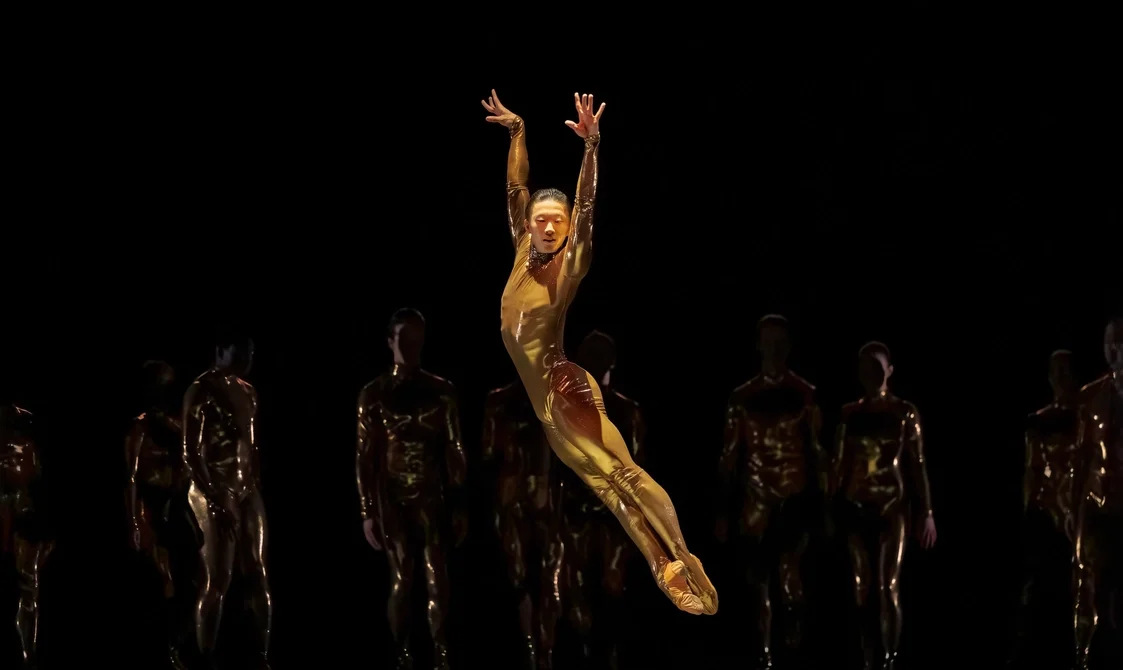
Mere Mortals Reneff-Olson Productions