Reid Concert Hall, 10/11/2026
Emma Morwood and Jonathan Fisher
Emma Morwood, soprano, Jonathan Fisher, piano
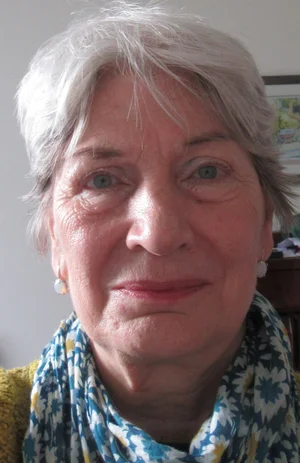
There's a fair-sized audience in Edinburgh University's Reid Concert Hall for this lunchtime concert. Emma Morwood says how pleased she is to be back in her alma mater and introduces her programme of twentieth century songs which features explorations of folk stories. She and her accompanist, Jonathan Fisher, share their commentary on the programme. Emma has also shared her fashion sense, recently seen on BBC's the Great Sewing Bee: she made her own dress and a matching tie for the pianist - “My first wearing, but certainly not my last,” he assures us.
First we hear three songs from 'Clearings in the Sky', composed in 1914 by Lili Boulanger (1893 – 1918). These songs of youth, written by Francis Jammes, are an ideal concert opener. The first celebrates the “gawky grace of a girl” who laughs as she falls into a pond. The lovelorn poet in the second notices the breath of spring, and the third's narrator is a young girl captivated by the black Madonna statue her mother has given her. It's pleasing to report an excellent printed programme with translations of the French and German songs, which we can read clearly in a well-lit hall!
Emma Morwood has performed with orchestras, conductors and opera companies across Europe. I heard her for the first time recently singing with the National Youth Choir of Scotland in their 30th Anniversary Concert when both her lyrical and coloratura singing were on display in 'Carmina Burana'. She's also a valued song coach with the SCO Chorus and has recently been appointed Inaugural Associate Opera Artist with the EIF. Jonathan Fisher, who has worked with her many times, is an accomplished collaborator with many international singers including Roderick Williams, John Tomlinson and Susan Bullock.
Jonathan points out that the next two composers, Vaughan Williams and Rebecca Clarke, spent time in Paris and, like Boulanger, were influenced by the music of Ravel. He and Emma disagree about the meaning of Vaughan Williams 'Dreamland', an evocative setting of words by Christina Rosetti. He thinks it's about sleep while she believes it's about death. It's a work which receives a sumptuous legato performance, and the ending is indeed ambiguous: “rest, rest, a perfect rest”.
Rebecca Clarke's first song, 'The Seal Man', forms a pair with Liszt's setting of 'Die Lorelei'. Both are chilling works about seduction by water creatures. Liszt, one of many composers to set Heine's poem, emphasises the rippling water and the underlying tension in the piano part. Emma's rendition of 'The Seal Man', Clark's eerie take on Masefield's early 20th century poem, creates the scene vividly in the description of the night, the path to the sea, and especially the clear declarations of love by the woman and the seal man, both with sparse accompaniment. The audience are sympathetic to their love, but “She drowned , of course.”
Clarke's setting of Yeats’ 'Down by the Salley Gardens' begins the last group of songs with simple folk-inspired melodies, almost but not quite dislodging the original tune from my head. Hamilton Harty sets an Irish traditional song with lovely grace-notes which are echoed in the piano part. James Macmillan's 'Ballad', which I hadn't heard before, is a beautiful setting of a William Soutar poem, which deserves to be as well-known as his more famous 'The Tryst' (“O luely luely cam she in”). A lovely end to the concert. But the musicians decide it's too gloomy and we're treated to an operatic encore, Musetta's cafe song from 'La Boheme' to send us waltzing home.
The Reid Concert Hall hosts another free concert on Tuesday 24th November at 1.10 pm. Graeme Stephen guitar, and Matthew Kilner, saxophone.