Concrete Scottish Connections
CONCRETE SCOTTISH CONNECTIONS: FINLAY, JANDL, GOMRINGER AND SATIE
Playfair Library 22/10/25
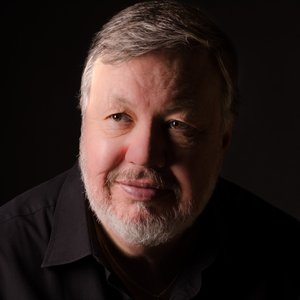
Florian Kaplick (pianist and performer)
I was privileged to be invited to the beautiful Playfair Library in Edinburgh University’s Old College for an event organised in collaboration between the University’s Department of European Languages and Cultures, the Goethe-Institut, the Consulate General of Germany in Edinburgh, the Austrian Consulate in Edinburgh, the Consulate General of Switzerland in Edinburgh and the Austrian Cultural Forum.
The event was a performance lecture/recital by Florian Kaplick, a German psychiatrist, based in Scotland, and well-known for fusing music, art and spoken word. His subject was Concrete Scottish Connections: Ian Hamilton Finlay, Ernst Jandl, Eugen Gomringer and Erik Satie. The first three were all born, coincidentally, in 1925 (also the year Satie died), and were at the forefront of the concept of Concrete Poetry in the 1950s and 1960s, a bold literary movement which broke linguistic barriers and reimagined the power of words.
Assuming, probably correctly, that many in the audience were unacquainted with the concept of Concrete Poetry, Mr Kaplick entertained and educated us through, in particular, the friendship between Finlay and Jandl, and their fascinating correspondence between Finlay’s house and garden, Little Sparta, and Vienna. Little Sparta is an extraordinary sculpture garden at the southernmost end of the Pentland Hills, a living, breathing monument to the amazing creative genius of Ian Hamilton Finlay. In the 1960s, he produced his first collection of concrete poetry – poetry in which the layout and typography of the words contributes to its overall effect. Much of his work was published in his magazine, Poor. Old. Tired. Horse and Mr Kaplick cleverly juxtaposed poetry by his correspondent, Ernst Jandl in Vienna, with snippets of that correspondence, along with examples of the work of the Swiss concrete poet, Eugen Gomringer.
These poets all shared a love for the strange, haunting music of Erik Satie, who had himself a connection with Scotland through his Scottish mother. His most famous piano works, his three Gymnopédies, from 1888, were played by Mr Kaplick at intervals throughout the evening, beautiful in their melancholy dreaminess. The name comes from a Greek word referring to an annual festival in Sparta when young men and/or women danced naked, although anything less like dance music than the Gymnopédies is hard to imagine. Note, however, the Sparta connection again with Finlay and his garden, which he whimsically named in opposition to Edinburgh’s claim to be the Athens of the North.
The Concrete Poets loved Satie, as did the equally quirky composer, John Cage, perhaps most famous, unfairly, for his 4’33”, a piano piece with no music. Mr Kaplick played a more normal piece of Cage, still timed but sounding, in front of a screen showing some of Robin Gillanders’ photographs of Little Sparta, making yet more concrete connections! Mr Kaplick came to my concert at the beginning of the month in Dalkeith Palace, in the room where Robin Gillanders’ photos of Rousseau’s garden in France were exhibited. They met after the concert, and the result of that conversation was the section of tonight’s recital showing the photographs of Little Sparta, with John Cage’s piece playing.
The Concrete Poets also loved Jazz, and Mr Kaplick indulged in a clever little piece of Concrete Music by inserting into a version of Chuck Berry’s ‘Roll over, Beethoven,’ snippets of Beethoven’s Waldstein Sonata and Tchaikovsky’s First Piano Concerto.
It was brilliant, as was the whole evening, and a good audience was royally entertained and educated. There were several musicians, artists and writers present, along with many representatives of the Edinburgh German-speaking community, and I was delighted to see that doyen of the avant-garde art world, the 95 year old Richard Demarco in attendance.