RSNO Valentine’s Concert
Usher Hall, 13/2/2026
Royal Scottish National Orchestra, Kevin John Edusei, conductor, Makoto Ozone, piano
After the heady delights of Brahms and Tchaikovsky last Friday, the RSNO brought us a quite different programme tonight, of Tchaikovsky, Rachmaninov and Zemlinsky. I was a little trepidatious beforehand, as I wasn’t convinced that a big enough audience would turn up for what was a largely unknown programme. O me of little faith! A very decent audience turned up for what was a fascinating and well-planned concert.
The German conductor, Kevin John Edusei, had been engaged to see us through the evening, and he was a warm and stable centrepiece for the whole enterprise. His CV is pretty impressive, with a good mix between opera and concerts, and from the very first low notes of the Tchaikovsky overture, he was in obvious command. Tall and with a clear beat, he dominated the podium, and directed the orchestra through the complicated scores on offer tonight.
We started with Tchaikovsky’s early ‘Romeo and Juliet Fantasy Overture’, from 1870, a piece the composer returned to several times in his short life. Many of the Romantic composers of the 19th century were fascinated by Shakespeare and his work, and Tchaikovsky was no exception. The tragic tale of two star-crossed lovers, who meet together against the opposition of two rival factions, has intrigued composers and artists since the 16th century. Billed as a romantic Valentine’s programme, I’m not sure whether a piece based on a play where everyone dies, is ideal for a cosy night out. Similarly, the Zemlinsky work in the second half was inspired by the composer’s grief and rage at being dumped by Alma Schindler, so again not a bundle of laughs and stolen embraces.
Nonetheless, Tchaikovsky’s music is epic in its romantic grandeur, and when the great love theme soars into the auditorium, everyone metaphorically snuggles up in sheer aural pleasure. Mr Edusei conjured up a wildly thrilling performance of the overture (which of course wasn’t an overture at all) and the RSNO played their socks off!
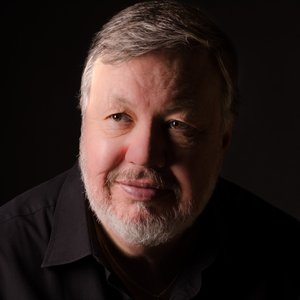
After a short hiatus while the Usher Hall Steinway was wheeled into place, we welcomed the sparkly appearance of tonight’s piano soloist, Makoto Ozone, who gave a multi-layered performance of Sergei Rachmaninov’s Rhapsody on a theme of Paganini. Mr Ozone delighted Scottish audiences in 2024 with his stunning playing of Gershwin’s Rhapsody in Blue, and he was every bit as exciting in this well-known Rhapsody from 1934. Initially a jazz pianist, he won a Grammy nomination in 2003, and formed his own big band in Japan in 2004, No Name Horses, but since then he has devoted more of his time to classical music, but there was no escaping the jazz influences in his playing of the Rachmaninov, and very exciting it was!
After the interval, we were introduced to a work that most of the audience had never heard, ‘Die Seejungfrau’ (The Mermaid), by the Austrian composer, Alexander von Zemlinsky, indeed a piece that had been lost to history for nearly 80 years since its premiere in 1905, conducted by the very same Gustav Mahler whose marriage to Alma Schindler had precipitated the composition of the work in the first place. After a few performances, Zemlinsky withdrew the work, and, splitting it up, left different parts in two places on separate continents and it was not until 1984 that two musicologists managed to put it all together again, providing the world with a minor masterpiece.
Based loosely on the Hans Christian Andersen fairy tale, ‘The Little Mermaid’, with Zemlinsky as the Mermaid and Alma as the Prince, it is basically a tone poem in three parts, and it is absolutely gorgeous. Characterised by the lush harmonies of turn of the century romantic impressionism, it offers an orchestra all sorts of opportunities to show its paces, and the RSNO rose to the challenge wonderfully. Guided by the clear and commanding baton of Mr Edusei, all sections played beautifully, and tonight’s leader Lena Zeliszewska, the RSNO Associate Leader, thrilled us with her superb playing in the several violin solos sprinkled throughout the work.
So a slightly oddly conceived programme for Valentine’s Day actually left us feeling warm and romantic after all, and grateful for having been introduced to a remarkable work with which we were unfamiliar, and which I certainly would like to hear again soon.