St Mary’s Church, Haddington, 10/9/2025
The Philharmonia Orchestra, Rory Macdonald (conductor), Steven Osborne (piano)
I first met Rory Macdonald twenty years ago when I was working at the Royal Opera House, Covent Garden, on Philip Glass’s ‘Orphée.’ I was singing the Poet and Rory, then a Jette Parker Young Artist, was the conductor, and we immediately bonded as two Scots working in London. He has gone on to great things, and it was a real pleasure to see him at the helm of the brilliant Philharmonia Orchestra in the unusual setting of St Mary’s Church in Haddington. My last experience with the Philharmonia was at Garsington Opera in 2017, where they were playing for ‘Pelléas et Mélisande,’ in which I sang my signature role of Arkel. From the very first rehearsal with the orchestra, I was bowled over by the richness of their playing, especially the lower strings, and the prospect of hearing this wonderful orchestra in Scotland with Mr Macdonald as conductor was most exciting.
It is a coup of some magnitude for the Lammermuir Festival to have attracted the Philharmonia here, and a capacity audience had turned up to hear them in a delightful programme of much loved pieces.
They started with Mendelssohn’s Overture, ‘The Hebrides’, written after his trip to Scotland in 1829. His famous visit to Staffa and Fingal’s Cave resulted in the composition some months later in Rome of this wonderful Overture, a work no less superb for being so well-known. From the first rocking motion in the strings, the essence of the Hebrides and the sea round about them was captured by the 20 year old German, and the orchestra played it to the hilt. I have been ambivalent about the acoustic of St Mary’s for singers, but for a big orchestra, it was phenomenal, and this is what made this concert exceptional.
After the Overture, we heard Mozart’s late Piano Concerto no 27, with the fantastic Scottish pianist, Steven Osborne. Mr Osborne is a firm favourite of the Festival, and as its Patron, it is always a pleasure to hear him here. His command over the demands of the composer is total, and he produced exquisite sounds from the Steinway throughout the concerto. Written in the last extraordinary year of Mozart’s life, the same year as the Requiem, The Magic Flute and the Clarinet Concerto, it seems to sum up the composer’s mature style perfectly. Of course, we have no idea what Mozart would have written later, but what he wrote before his tragic death at the age of 35 is incredible enough. Rory Macdonald and the Philharmonia were the perfect accompanists to Mr Osborne, especially in the beautiful slow movement, the Larghetto. As an encore, Mr Osborne played an exquisite miniature – Anatol Liadov’s music for a musical clock!
After the interval, the music became even better, with Beethoven’s 3rd Symphony, the Eroica, which nearly took the fibre glass roof off the building! Mr Macdonald set off at quite a lick, and I briefly feared for the orchestra, but they are so good that they coped perfectly with the Allegro con Brio, and it was enormously thrilling. I was reminded that Otto Klemperer was one of the earlier musical directors of the Philharmonia, and the great old man would have been astonished by the tempo chosen by Mr Macdonald for the first movement. How things change!
Each section of the orchestra was prominent in the Eroica, and, having not heard it live for while, I was really impressed by the way they responded to Mr Macdonald’s enthusiastic conducting with precision and panache. The slow second movement, a funeral march filled with grief, although punctuated by visions of hope and sunlight, evolved at just the right speed, while the scherzo with its rollicking horn trio swept us along towards the finale, an extraordinary set of variations, which roared to its dramatic conclusion. Napoleon may have let Beethoven down in his quest for a hero of his time by becoming an Emperor like so many of his predecessors, but the real hero is the composer, a miracle-worker of everlasting genius!
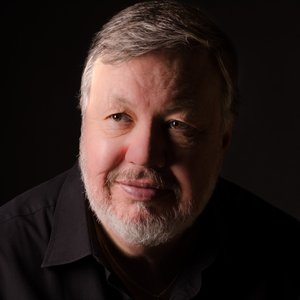
Photo credit: Marc Gascoigne