EIF 26: Mahler’s Das Klagende Lied
Usher Hall 27/8/26
BBC Scottish Symphony Orchestra
Sir Donald Runnicles (conductor)
Before I get to my review of this concert, we need to have a look at the run up to it. The concert was billed as ‘Das Klagende Lied’, by Gustav Mahler. Edinburgh’s own superstar conductor, Sir Donald Runnicles was the conductor with the BBC Scottish Symphony Orchestra. Edinburgh’s world class Mezzo-Soprano, Catriona Morison, was one of four soloists. It’s towards the end of the 3rd week of the Festival, and many visitors from the south and overseas have gone. ‘Das Klagende Lied’, a very early work by Mahler, was the only piece mentioned in the publicity, a composition that even keen Mahlerites like myself have never heard live. Prices were high – over £80 for the Stalls. The Usher Hall was busy, but large swathes of seats were unoccupied, especially in the expensive seats. The concert opened with Schubert’s Unfinished Symphony, one of the greatest works in the entire repertoire, and one of the most popular. Not many people knew it was being played until they sat down in their seats, and read the largely uninformative free programme. Surely a publicity campaign featuring Schubert, Sir Donald and Catriona Morison, and perhaps a judicious lowering of prices (since historically the last week of the Festival is supported by locals), would have enticed a far bigger audience in for what was a really tremendous concert! It was a travesty and a huge disappointment to see large numbers of empty seats tonight! It was a fantastic concert, and deserved a better audience.
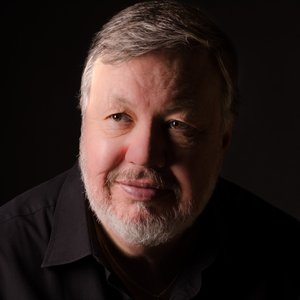
So, what of the concert itself? It was terrific, and it was lovely to see the BBCSSO reunited with its Conductor Emeritus, Sir Donald Runnicles. EMR readers will recall that Sir Donald was in my class at George Watson’s College from S1 onwards, and so I have known him since 1967. Sadly, I only sang with him once, a performance of Wagner’s ‘Tannhäuser’ with the BBCSSO in a Prom concert at the Albert Hall, but I have followed his career with interest, and you can find the interview I did with him a few years ago on the EMR website.
His take on Schubert’s 8th Symphony (The Unfinished) was warm and very beautiful, speeds judiciously chosen and internal balances scrupulously controlled. Conducting without a baton, one could see him almost moulding the sound, and the orchestra reacted superbly. Schubert’s intricate woodwind writing was lovingly rendered and, once again, I was reminded how important this short-lived Viennese composer was in the entire history of music.
After the interval, the orchestra was joined by the Edinburgh Festival Chorus and the National Youth Choir of Scotland, along with a well-matched quartet of soloists - Kathleen O’Mara, Catriona Morison, John Findon and Nicholas Brownlee in a riveting performance of Gustav Mahler’s very early cantata, ‘Das Klagende Lied’ (The Song of Lamentation). Based on a story by the Brothers Grimm – ‘The Singing Bone’ – it’s a macabre tale of death and magic in a forest kingdom, with a text by the youthful Vienna Conservatoire student Mahler, which would win few prizes in a libretto competition (‘O Woe!’ and ‘O beautiful woman, for whom shall your sweet beauty bloom?’ and ‘O winds, why do you blow so coldly? What do your whispers mean?’). Fortunately the music is much better, and instantly recognisable as Mahlerian. I have always marvelled at how astonishingly complex his First Symphony (1888) is, but, given that ‘Das Klagende Lied’ was written as a final year composition piece at the Conservatoire, finished in 1880, the maturity of the First is slightly less surprising. The work was never performed until 1901, much revised and changed, but Sir Donald played the original 1880 version to a large extent, including the first movement, Forest Legend, that Mahler cut in 1901.
The tale is told in three sections: the fratricide committed over the love of a stern queen, the discovery by a wandering minstrel of the buried bone of the murdered brother and its conversion into a flute, and the wedding of the murderous brother to the queen interrupted by the flute singing its tragic story to the scandalised wedding guests.
The story is told by the chorus, the children’s choir and the soloists, largely at random, and popping up and down like skittles. None of the soloists has any extended music, but there is enough to enjoy as they tell the story and comment on the events. The American soprano, Kathleen O’Mara, has a strong voice, but was still often overpowered by the orchestra, although I think that was the youthful Mahler’s fault rather than hers. I would like to have heard more of Catriona Morison’s silky mezzo, but what we heard was very lovely. Having just sung with Beth Taylor last week, we are indeed lucky to have two top quality Scottish mezzos around at the moment, not forgetting Karen Cargill as well!
The English tenor, John Findon, revealed a splendid heroic voice of potentially epic quality, although he seemed very tense on the stage, while the American baritone, Nicholas Brownlee, oozed quality in his every utterance. The Edinburgh Festival Chorus, well-trained by James Grossmith, sang superbly throughout, and the contribution of the National Youth Choir of Scotland (director Christopher Bell) was excellent.
The BBCSSO was in fine form with all sections functioning perfectly, and Sir Donald, now with a baton in his left hand, directed a thrilling and spine-chilling performance of a rarely played but stunning work. This is what festivals should be doing – revealing little known gems performed at the highest level. Haste ye back, Sir Donald!