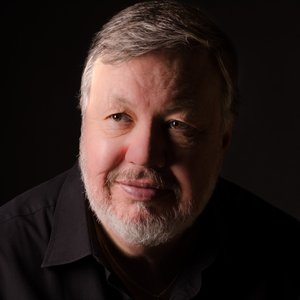
Piotr Anderszewski, Brahms and Bartók
Queen’s Hall, 11/8/2025
Piotr Anderszewski (piano)
My first foray to the Queen’s Hall in this year’s Edinburgh International Festival was to hear the distinguished Polish pianist, Piotr Anderszewski, play a programme of Brahms and Bartók. I was initially somewhat sceptical of this odd juxtaposition of composers, but it worked really well in the capable hands of Mr Anderszewski, and a packed house gave him a wonderful reception at the end.
The concert began unpromisingly, as an official of the EIF announced several minor changes to the programme. Since the concert originally consisted of twelve short pieces by Johannes Brahms and then 14 short works by Béla Bartók, any change was bound to cause confusion, and your intrepid reviewer’s heart sank at the announcement. Not being any sort of pianist, it was rather a critic’s nightmare, as I didn’t know any of the music and each piece ran smoothly into the next. However, a glance at the amended programme at the interval revealed to me that the Bartók was an early opus of 14 bagatelles, unchanged, and that Mr Anderszewski, having announced a group of late Brahms miniatures, had simply replaced some earlier pieces with later ones, to keep the consistent sound world of the elderly Brahms intact. In his late 50s, Brahms wrote three sets of Intermezzi (in-between pieces), short piano explorations of a largely melancholic and resigned nature, which seem almost private personal pieces for the pianist. Mr Anderszewski’s contemplative style was well-suited to this introspective music, and indeed it seemed as if we were overhearing a fine pianist playing some late Brahms for his own pleasure. He possesses a fine technique which makes even the hardest music sound smoothly logical, but there were none of the histrionics of some more flashy players to get in the way of our and his enjoyment. I have sung the even later 4 Serious Songs, Opus 121, written the year before Brahms died, and it seems clear that the now terminally ill composer was exploring new aspects of his musical gifts in these late piano and vocal scores.
The unlikely combination of Bartók and Brahms made the concert quite special, and the contrast of youthful experiment in the second half with melancholy contemplation in the first made for fascinating listening. I was glad that I had attended Catherine Backhouse’s piano-accompanied performance of Bartók’s ‘Bluebeard’s Castle’ a few days ago (see my review on EMR), as that sound world was evoked clearly in the 14 Bagatelles that Bartok wrote in his mid-twenties in 1908. These are extraordinary miniature pieces for solo piano, pushing the boundaries of tonality and harmonic structure to their limit, and yet keeping Bartók’s own personal idiom intact.
Mr Anderszewski demonstrated again a fabulous ability to get right inside the music, but also a willingness to share it with us. The ovation at the end was heartfelt and well-deserved, and we were rewarded by an encore of Chopin, bringing out the genius of his compatriot.