RSNO: Movie Night
Usher Hall, 15/11/2025
Royal Scottish National Orchestra, Alexander Shelley (conductor), James Ehnes (violin)
A slightly odd programme on paper turned out to be a magnificent evening of superb music making, including a splendid new violin concerto by the American composer, James Newton Howard.
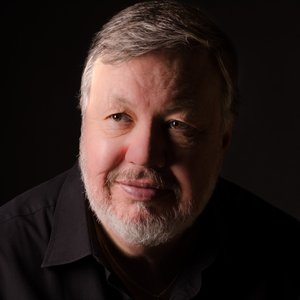
We fought our way to the Usher Hall through driving rain (winter is coming!), and settled down to welcome the orchestra, led tonight by its magnificent leader, Maya Iwabuchi, and conducted by Alexander Shelley. His was a new name to me, but he has a distinguished CV and conducts all over the world. Born in London, but trained in Germany, much of his early career has been in that country, where he received the Cross of the Federal Order of Merit in 2023. He has been Music Director of the NAC in Ottawa (an orchestra with whom I sang in the 1990s), and the Nürnberger Symphoniker, and will become the 3rd Director of the Pacific Symphony in Orange County, California, from next season.
Tonight’s concert was devoted to the movies, but it wasn’t a low-brow trawl through ‘Star Wars’. Great works which have featured in important films shared the bill with a new Violin Concerto by one of the finest modern composers of film music, James Newton Howard.
We started with the Adagietto from Gustav Mahler’s Fifth Symphony, first heard in 1904. The programme note suggested that this movement, which comes towards the end of the 5th Symphony, is Mahler’s best known music, due to its appearance throughout Luchino Visconti’s film from 1971, ‘Death in Venice’, itself adapted from Thomas Mann’s novella of 1912, and starring Dirk Bogarde. That may be true, but anyone using the Adagietto as a template for Mahler’s music would be utterly confused by almost all the rest of his oeuvre. This is the problem with taking pieces of music out of the original context, a modern tendency which I feel can be very short-sighted. Nonetheless, the Adagietto is a wondrous oasis of calm, scored for strings and harp, and it does have a magical aura about it which is deeply moving. It proved to be the perfect opener to this concert, highlighting the superb string section of the RSNO, and the delicate harp playing of Pippa Tunnell. Mr Shelley didn’t overdo the languor and allowed the warm string sounds to proceed at a leisurely but not funereal speed.
The second work in the programme wasn’t featured in a film, but was written by a superstar film composer, James Newton Howard. Born in California, he last visited Edinburgh in 1976, while he was the keyboard player in Elton John’s band, having started as a busy session player, working with the likes of Diana Ross, Ringo Starr and Harry Nilsson. He also played keyboard on many of Toto’s hits, and briefly toured with Crosby, Stills and Nash, before branching out to arranging, orchestrating and finally composing for various performers. He composed the score for the 1990 film, ‘Pretty Woman’ and received his first Oscar nomination in 1991, for the film, ‘Prince of Tides’, with Barbra Streisand, with whom he was, at the time, romantically attached. Since then, he has been nominated several times for Academy Awards and Emmys, winning an Emmy in 2001 for the title theme for ‘Gideon’s Crossing’, and also a Grammy Award, shared with Hans Zimmer, for 2009’s ‘The Dark Knight’.
Clearly a hugely talented composer for films and TV, James Newton Howard has turned his hand to writing classical compositions as well. Appointed Visiting Professor of Media Composition at the Royal Academy of Music in 2010, he wrote his first violin concerto in 2015, premiered by James Ehnes and the Pacific Symphony, and tonight’s Second Violin Concerto in 2024, premiered by James Ehnes and the National Symphony Orchestra, Washington, in June 2025. It was a co-commission from the RSNO and the National Symphony Orchestra, and its UK premieres are this week in Perth, Edinburgh and Glasgow.
Written in three movements, the concerto explores “contrasts of intimacy and grandeur, lyricism and rhythmic vitality”. Echoes of Shostakovich dominate in the first movement, which sets off with the violin alone in a perpetuum mobile style of high excitement, giving way to a slow movement of rare beauty, invoking memories of Vaughan Williams at his most lyrical. I don’t mean that the music is derivative in any way, but Mr Newton Howard has an uncanny gift for choosing just the right melody and rhythm. The final movement tumbled joyously to a conclusion, sparking great applause from the large, age-diverse audience. James Ehnes was an ideal exponent of this excellent new work, thrilling in his virtuoso playing but also able to spin beautiful melodies and deeply expressive legato eloquence. Alexander Shelley provided a perfect accompaniment to Mr Ehnes’ sweet playing, and we all wandered off to our interval drinks with warm feelings of satisfaction, on hearing a new work of real substance and quality.
The second half began with Samuel Barber’s ‘Adagio for Strings’, adapted by the composer from his string quartet in 1938, and expanded for string orchestra to be played in a radio performance in New York by Arturo Toscanini and the NBC Orchestra the same year. Since then, it has been played at countless funerals and valedictory concerts, although that was not the original purpose of the composition. Barber’s intention, apparently, was to capture in music a huge swell far out in the ocean, which eventually crashes onto the shore, representing the inexorable power of nature. It appears in Oliver Stone’s great war film about Vietnam in 1986, ‘Platoon’, and that was one of the reasons for its appearance tonight. Whatever the origins of the piece, there is no denying the deep feelings it conjures up in the listener, and the strings of the RSNO were at their very best in conveying that sad, melancholic beauty. Once again, Alexander Shelley was instrumental in guiding us through the work with care and balance.
The concert ended with Richard Strauss’s magnificent tone poem, premiered in 1896 in Frankfurt, ‘Also sprach Zarathustra’, a musical evocation of the philosophy of Friedrich Nietsche, whose earth-shattering concept of the idea of a ‘Superman’ taking humanity away from the narrow confines of religion and morality was providing endless topics of discussion and controversy for the intellectuals of the Fin de Siècle. Later in the 20th century, the use of the opening 5 minutes of the tone poem in Stanley Kubrick’s 1968 film, ‘2001, A Space Odyssey’, and its further use on television as a background for the moon landings from 1969 – 1972, established it as one of the most iconic works of all time, familiar to millions who are blissfully unaware of the existence of Richard Strauss.
It was however, as a piece of Strauss, that we were entertained in the Usher Hall, and Alexander Shelley and the RSNO delivered a blistering and monumental performance. What the unsuspecting burghers of Frankfurt were expecting in November 1896 we don’t know, but they must have been blown away, as we were, by the extraordinary opening sequence, Sonnenaufgang (Sunrise), as the three sets of chords, punctuated by ferocious timpani, and swelled by a full organ, filled the Usher Hall with spectacular sound. It is a work rarely performed these days, and it is fabulous live. Paul Philbert, away on his sabbatical in Ottawa, would have been enormously jealous of the Guest Principal timpanist, Adrian Bending, who gave those drums some thumping! Michael Bawtree was able to give free rein to the magnificent Usher Hall organ at the climax of the sunrise.
Now, of course, we, the audience, heard the vast majority of the work which people rarely experience, as the 32 year old Strauss unleashed the full expressive possibilities of the late 19th century orchestra. In a musical portrayal of evolution, the composer takes us on a journey through many of Nietsche’s ideas, and quite a lot of his own, through questioning of organised religion, through scientific ideas, through personal longing and experience. There’s a new dawn, with cockcrows in the high trumpets, and a wonderful evocation of a mental dance, a Viennese waltz hinting at the delights of ‘Der Rosenkavalier’ 15 years later, superbly played by Maya Iwabuchi. There was some delicious interplay between Felix Tanner (viola) and Pei-Jee Ng (cello), and many wonderful solos for the woodwind, as the work slowly descends, after the bells of midnight, into a reflection on whether Nietsche’s vision is a truthful one. Strauss leaves us, and himself, unsure, as high woodwind, strings and harp harmonies clash gently but uncomfortably with pizzicato cellos and basses.
The quiet ending is perhaps all the more surprising after the incomparably bold beginning, but that is the genius of the work, and the astonishing maturity of Richard Strauss, even at this early age, is revealed for all to see. The old adage of the time that ‘if we must have Richard, let it be Wagner, and if we must have Strauss, let it be Johann’, is laid bare for the nonsense it was then, and is now.
Another great evening from the RSNO, and a personal triumph for the understated excellence of Alexander Shelley.