The Sixteen - The Choral Pilgrimage
Greyfriars Kirk, 17/10/2026
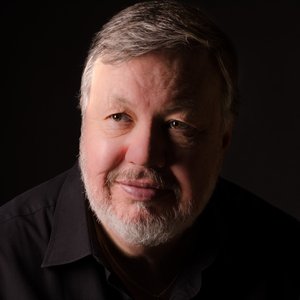
The Sixteen – conducted by Harry Christophers
The Choral Pilgrimage 2026 – Morales and Vivanco – Lead, Kindly Light
It’s three years since The Sixteen last graced Edinburgh with their presence, but it was worth the wait to hear this year’s programme from their extensive British tour, which started in April and finished here today. The tour is called Lead, Kindly Light which refers to the title of this year’s commission, a delightful motet by the Cornish composer, Kerensa Briggs, of which more later.
This has been a vintage year for me, as I have been able to hear most of the top British choirs and vocal ensembles here in Scotland – the Tallis Scholars, the Gesualdo Six, the Marian Consort, Tenebrae and The Sixteen. We are indeed privileged to have such wonderful professional groups all operating at the height of their powers, and today’s concert was one of the highlights.
As I remarked 3 years ago, the Sixteen has been performing at a phenomenally high level since 1979, and it is enormously to the credit of its founder and conductor, Harry Christophers, that it has maintained such a standard of excellence through multiple generations of singers. He has maintained a balance of new and more mature singers throughout, and this contributes to the magical sound that they produce, blending clear and thrilling soprano tones with sonorous basses, along with vivid altos and rich tenors in the middle. There is a core of 25 singers who featured on the tour with 17 or 18 singing in each concert - we had The Seventeen today!
The concert began with a lovely motet by Sebastián de Vivanco (1551-1632), ‘Christus factus est pro nobis’. Vivanco was a contemporary of Tomás Luis de Victoria, both being born in Ávila, and both singing as boys in the cathedral there. Unlike Victoria, who spent much of his career in Italy, it seems that Vivanco remained in Spain, ending up as professor of Music at Salamanca University and Maestro de Capilla in Salamanca Cathedral, as an ordained priest. I was unaware of Vivanco’s existence until today, but he was clearly a very fine composer indeed, and this motet, to be sung on Maundy Thursday, using a text from St Paul’s Epistle to the Philippians, with three choirs of four voices, demonstrates an excellent grasp of counterpoint and a flair for harmony. The Sixteen also demonstrated a skill for organising themselves into vocal groups with practised ease, and this was a feature of the concert, as various singers moved around into ever-changing figures depending on the context of the work being sung.
The second piece on the programme introduced us to another genius of the slightly earlier Golden Age of Spanish music, Cristóbal de Morales (1500-1553), born in Seville and soon employed in Rome by Pope Paul III. He ended his career as Maestro de Capilla in Malaga Cathedral.
His ‘Emendemus in melius’ is a moving five part motet, asking for forgiveness from God for sins committed, even unwittingly. One does come away from a concert of music of this period somewhat overwhelmed by the 16th century Spanish Catholic obsession with sin and repentance, but the music is so good that one can at least wallow in that if not the sentiment!
These two initial motets set the scene for a concert of wonderful 16th century polyphony, and the Sixteen rose to the challenge of this complicated music with aplomb and style. A welcome sense of exuberance arrived with Morales’ motet, ‘Gaude et laetare Ferrariensis civitas’, a piece written in 1539 to celebrate the appointment as cardinal at Ferrara Cathedral of Ippolito II d’Este, the art-loving son of Lucrezia Borgia and the Duke of Ferrara. The religious aspect of the appointment was perhaps less important than the gratitude to Pope Paul III of the Ferrarese and the d’Este family!
Kerensa Briggs (born in 1991) is a Cornish composer who has already made quite a name for herself, recently as composer in residence with the St Louis Chamber Chorus in the USA. Her setting of Cardinal Newman’s 1833 Hymn, ‘Lead, Kindly Light’, was a commission by The Sixteen for this 2026 tour, and this was its Scottish premiere. It is a strongly individual piece, beautifully constructed, with most appealing harmonies, ideally suited to the Sixteen’s sound. Two solo voices stand out from the choral sonority, Katy Hill (soprano) and Elisabeth Paul (alto), both fine voices and expressive performers – one of the major attractions of such a good professional choir is that solos are always sung well.
The last piece before the interval was Vivanco’s superb ‘Magnificat Octavi Toni’, an extended work alternating polyphony with plainsong, up to eight parts soaring to the ceiling of Greyfriars Kirk, and culminating in a glorious double choir ‘Et Spiritui Sancto’.
The second half was just as good, with highlights for me of Morales ‘Lamentabatur Jacob,’ an extraordinary evocation of the terrible fate of Jacob, who sees his sons sold into slavery in Egypt, and his increasingly desperate pleas for their return, and a beautiful three choir motet by Vivanco, ‘Caritas Pater est’. Three choirs of three voices sing separately and then together about the mystery of the Trinity, an imaginative response to a supremely complex theological idea.
This excellent concert ended with James MacMillan’s ‘Nothing in Vain’, a 2021 commission which explores both the composer’s religious belief and his Scottish musical origins. Fine solo contributions came from the splendid Katy Hill again, and Mark Dobell (tenor) and Ben Davies (baritone), excellent both. This extended piece was a worthy climax to the concert, and a very full Greyfriars Kirk roared its acclaim, after which we tumbled out into the luminous Edinburgh afternoon.
Interestingly, most of the choir was returning to the south of England that night, as apparently the cost of accommodation in Edinburgh was prohibitive. That’s certainly not something we want to hear about our capital city! I felt sorry for the choir, who have been touring this programme over 20 dates since mid-April. Such a marvellous tour deserved a jolly finale, rather than a scramble for trains and aeroplanes!
The last word goes to Harry Christophers, whose vision, charisma and great musicianship has sustained the Sixteen for nearly 50 years, a period of continuing excellence which I salute.