Music at Paxton - The Princesse Requests…
Paxton House 26/7/25
Princesse Edmond de Polignac Requests the Pleasure of Your Company
Chloé Piano Trio with Maggie Steed
Maria Gîlicel violin, Jobine Siekman cello, George Todică piano
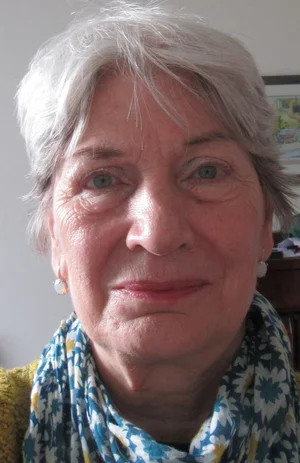
This concert is a re-creation of a Parisian musical salon in the early 20th century. Its style of presentation is a first for Music at Paxton. In the programme note, Artistic Director Angus Smith (who also wrote the witty script) praises the French salons, the private invitation-only concerts which launched the careers of so many composers and performers from the 1870s through to the Second World War. One of their most famous hostesses was the Princesse de Polignac, the American-born Winnaretta Singer, heir to the sewing machine fortune, whose successive marriages to members of the French aristocracy gave her the entrée to this world. Actor Maggie Steed, in elegant dress and colourful necklace, takes on the role of the Princesse and, comfortably seated at the side of the stage, entertains us with her own life story and gossipy tales of the many musicians she came to know. Although she was only one of her father’s many children, all of whom benefited from his will– “my father had a very rackety life” - she was still very rich but to flourish in the French music scene she needed to marry someone with the right name and connections. She calls the pianist to the stage to play one of Satie’s “lovely pieces”. George Todică, in black formal-wear, plays Erik Satie’s Gymnopédie No 1 with its memorable tune and quirky charm. The deceptively simple piano work is familiar to us now but would have raised eyebrows in 1888 when it was written. Satie, and the other composers we hear tonight, were composers sponsored by the Princesse, and show that she was a sharp judge of excellence and potential. Cellist Jobine Siekman is called to the stage, and she and the pianist play Fauré’s Elégie in C minor. The cello dominates the first part of the work with a slow tragic theme, with quiet piano accompaniment. The piano takes over in a violent outburst until the cello returns to the original theme, firstly in upper notes then sinking to the very bottom of the instrument’s range. The cello has a beautiful resonance: the Trio’s biography relates that it and Maria Gillicel’s violin are on loan from The Dutch National Instrument Foundation.
Both of the Princesse’s husbands agreed to marriages blancs “I never cared for men, if you know what I mean,” but after the death of her first elderly husband, she shared a marriage of minds with de Polignac, and they both enjoyed and spent money lavishly on the musical and artistic life of Paris and of Venice. The last member of the Trio, Maria Gîlicel is called up to play a work by Ravel, the fourth movement Animé from his Piano Trio in A minor, a work which he rushed to finish in 1914, before enlisting. It opens in striking fashion with bell-like imitations on the piano accompanied by shimmering high violin trills. The music becomes more impassioned as the work progresses, and the final overpowering section making virtuosic demands on the players. Sadly the Princess’s life with de Polignac didn’t last, The dancer Isadora Duncan’s friendship cheered him for a while, but he died suddenly and the Princesse was left a widow. She calls for some Beethoven, some of his youthful music and the Scherzo from his Piano Trio in G from his Opus 1 brings the first half of the programme to a sparkling and light-hearted close.
Interval conversation suggests that the salon format meets with the audience’s approval. Cleverly it’s tweaked somewhat so that the Chloé Piano Trio are heard more after the interval. The Princesse, in Maggie Steed’s well-judged impersonation, returns to the stage. Her commentary acts as a multiple biography of those on the Paris musical scene, an enjoyable way of fitting these well-known names into place with the others who knew and influenced them. Debussy’s music “bowled her over” when Messager first played some of ‘Pelleas and Melisande’ to her, and later she relished the controversy surrounding the opera’s opening in Paris! The Trio play the andante espressivo from Debussy’s Piano Trio in G, a short exploration of a lovely slow melody.
Dance was one of her passions: “Igor Stravinsky put a bomb under the Paris music scene but Diaghilev provided the explosive”. She describes the excitement of the pre-war ballets, ‘The Firebird’, ‘Petrushka’ and ‘The Rite of Spring’. The Trio play part of the ‘Suite Italienne’ of music from Stravinsky’s post-war ballet ‘Pulchinella’, based on music by Pergolesi, and other 18th century composers. The Serenata is a lyrical operatic aria, while the Tarantella allows the players to enjoy pounding rhythms. The Princesse tells much of the rest of her story now. Relatively unaffected by the war, she gave money to charities including to Marie Curie for a field X-Ray unit, and although there’s some scandal in her account of her affair with a married woman, but she has always enjoyed “family, friends and music”
The last two works let us hear the Trio in more extended pieces. First, from a contemporary of the Princesse, the short-lived Lili Boulanger’s ‘D’un matin de printemps’, with its echoes of Fauré and Debussy. An off-beat dance on the violin has very insistent piano accompaniment. Then there’s a more passionate central melody on strings before the dance races away, ending on a piano slide.
The last piece is chosen by the Chloé Trio. Cécile Chaminade,(1857-1944) composed and was a concert pianist, who toured England in the1880s and played for Queen Victoria – who later asked for Chaminade’s music to be played at her funeral. We hear the first movement, allegro moderato from her Piano Trio in A minor from 1887, music she described as “Romantic”. A dramatic work, with overtones of Brahms, it’s provides an unexpected ending, although it’s entirely fitting to look back from this programme of the new generations of French composers to French music in the older tradition. It happens to be exactly contemporary with the Satie ‘Gymnopédie’ which began the concert!