RSNO finances and the future
RSNO finances and the future
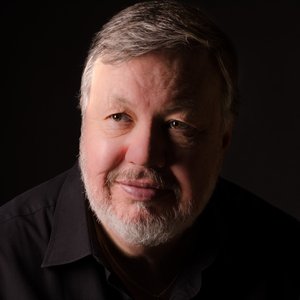
Written by Brian Bannatyne-Scott, on behalf of the Editors of the Edinburgh Music Review
It has come to everyone’s notice that the RSNO, one of the finest orchestras in the UK, has recently been in the news, as a result of the diminution of its grant from both the Scottish Government and the City of Glasgow, where it is based.
An operating deficit of £322,000 for 2025/26 has been announced, and its Chief Executive, Alistair Mackie, has warned of an existential threat to its full-time salaried model. The Edinburgh Music Review is very concerned by this news, and we are determined to help the RSNO in any way possible to maintain the excellent standards of this internationally recognised orchestra. I have had the pleasure and privilege of reviewing most of the RSNO’s Edinburgh concerts at the Usher Hall over the last 3 years, and have watched as standards, which were already very high, have grown and grown, and the result has been the award this year of the Royal Philharmonic Society’s Ensemble Award.
Regular readers of the EMR will have seen my reviews, which detail exactly why it is enormously important to continue to subsidise this national treasure. Music Director Thomas Søndergård, Principal Guest Conductor Patrick Hahn and Music Director Designate Giedrė Šlekytė are the artistic directors responsible for the present high standards and for the future direction of the orchestra, and the Principal Players within the RSNO, including the uniformly excellent Maya Iwabuchi (Leader), Igor Yuzefovich (Principal Guest Leader), Pei-Jee Ng (Principal Cello), Katherine Bryan (Principal Flute), Timothy Orpen (Principal Clarinet), Amadea Dazeley-Gaist (Principal Horn) and Christopher Hart (Principal Trumpet), are top notch soloists in their own right. All the other players are of a standard way above the norm, and consequently the sound of the orchestra, in every department, is phenomenal. We were privileged to hear the world-famous Berlin Philharmonic playing at this year’s Edinburgh International Festival, universally esteemed as the greatest orchestra in the world. A few weeks later, I listened to the RSNO playing Mahler’s 6th Symphony in the Usher Hall, and, honestly, there was little if any difference in quality.
The RSNO plays a full season of concerts in the Usher Hall and the Royal Concert Hall in Glasgow, with frequent appearances in Aberdeen and Dundee, their outreach takes them into schools, colleges and town halls all over Scotland, they play many crossover concerts of film music for a wider audience, they are often in the studio, recording film music themselves and they maintain a busy schedule of overseas tours. In other words, they are Scotland’s representatives at home and abroad, showing both our own citizens and the world at large how good they are, and more importantly, how wonderful classical music can be. There is no stuffy elitism here, other than the elitism of excellence in performance. The orchestra generates jobs and revenue, but above all, a chance for audiences everywhere to hear magnificent music played wonderfully.
Even in our present straitened times, how can anyone possibly grudge the spending of a few million pounds for this level of entertainment, especially when one hears of the tens of millions, indeed billions, going towards defence spending and projects like HS2 and a new runway for Heathrow!
The Scottish Government grant of just over £4 million has remained unchanged for 17 years, representing a cut in real terms of about 30%, Glasgow City Council has phased out and completely withdrawn its annual funding of £150,000, and spiralling costs, including increased National Insurance contributions, changes to UK Government Tax Relief for Orchestras and additional pension contributions have added to the problems. Somehow, we need to make clear to government, and indeed to the public at large, that spending money on the arts is not a peripheral cost, which can be switched on and off, depending on circumstances. It needs to be clear that arts spending is recognised as a way a country makes life better for its citizens. That this is not easily quantifiable in numbers is one of the great dilemmas faced by the arts everywhere. We look across at mainland Europe, where there seems to be a general consensus that the arts are really important for the well-being of society, and gasp jealously at the government subsidies given to all sections of the arts.
It must be said that it’s a very difficult prospect for any government to justify arts spending, as, clearly, the fine arts are appreciated by a relatively small percentage of the public, and the overall view that “it’s not for the likes of us!” is well established. The dogmatic search for diversity and outreach prevalent over the last few decades makes the argument even harder to win, and yet, the fine arts are, and have been, a template for a successful society over millennia. Our egalitarian society nowadays, which is a ‘good thing’ on the whole, does hinder the idea that excellence is a goal worth seeking, and makes the fight over funds harder to win.
I spent the whole of my career singing wonderful music in thought-provoking productions at the highest level, music that heals the soul and nourishes the senses. I sang all over the world, in many different countries and venues, and although the audience was mainly middle class everywhere, there was a feeling in most places that what we were doing was important, and towns and cities where I worked were happy that their taxes went, to a small extent, to this high culture.
The RSNO was a good orchestra when I was young, under the committed and inspiring direction of Sir Alexander Gibson, and it was more of a local Scottish orchestra. Times have changed. We have a Danish music director just now, and his successor is Lithuanian born and resident in Austria; few of the principal orchestral players are Scottish, but the orchestra represents Scotland on the world stage. Having spent the vast majority of my career working in other countries, I am not in a position to push a nationalist (small n) view here. I did, however, feel that I was part of whatever company I was working with, and it is abundantly clear that all the RSNO players buy into the fact that they are a Scottish band. This explains the large number of private sponsors of the orchestra from throughout Scotland, proud to be able to support this fine ensemble. However, they cannot do it alone. We need help from the Scottish government and I cannot be alone in being utterly flabbergasted by the withdrawal of the already paltry support given by the City of Glasgow, which should be thoroughly ashamed of itself, especially when the orchestra is based in Glasgow!
I hope readers will write to their MSPs and councillors to insist that more money is forthcoming for the RSNO, and, if they have any funds spare themselves, that they might consider supporting the orchestra directly.