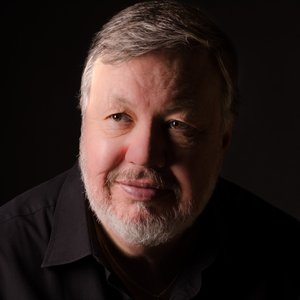
Gesualdo Six
St Salvator’s Chapel, St Andrews 13/3/26
Gesualdo Six, Owain Park director
It was with some excitement that I arrived in the magnificent St Salvator’s Chapel in St Andrews for a performance of Arvo Pärt's Passio, his setting in Latin of the St John Passion. Written and first performed in 1982, it was popularised in 1988 by the recording in 1988 by ECM, with the Hilliard Ensemble. I wasn't involved in the recording, but from the early 1990s, I sang the role of Jesus (Christus) with the Hilliards all over the world, culminating in a deeply moving performance in King's College Chapel in Cambridge.
It was in Cambridge in 2014 that the Gesualdo Six was formed to perform Carlo Gesualdo’s Tenebrae Responsories, and since then, they have gone on to establish themselves as the true successors to the Hilliard Ensemble, one of the finest small vocal ensembles in the world.
Directed by the bass, Owain Park, the Gesualdo Six can now be heard frequently at the top musical festivals and their blend of superb musicianship, beautifully balanced voices and an obvious delight in performing combines to render their every concert a special occasion.
Tonight's Passio marked the beginning of a special weekend celebrating the 70th Anniversary of the St Andrews Renaissance Group (now known as the Renaissance Singers), in which the Gesualdos are mentoring a choir of St Andrews graduates, returning to their Alma Mater and the choral group which remains their link with the past. I myself joined the choir in my first undergraduate year in 1973, and formed lifelong friendships, most notably with my wife, Fran.
It was an extraordinary feeling to sit in the chapel listening to the monumental opening chorus, 'Passio Domini Nostri Jesu Christi secundum Joannem', sung by the current St Salvator’s Chapel Choir, directed by Claire Innes-Hopkins. This great chorus sets the scene for an hour and a half of mesmerising musical genius, as the Estonian composer Arvo Pärt leads us through the story of Jesus's capture, trial and crucifixion. The story is told by a quartet of singers representing the Evangelist St John (Marie -Josée Matar (soprano), Guy James (countertenor), Joseph Wicks ( tenor) and Michael Craddock (baritone), accompanied by Ben Shute (violin), Around Mewar (oboe), Ian Gair (bassoon) and Louie Scott (cello). Josh Cooter (tenor) sings the angst-ridden Pontius Pilate and Owain Park (bass) the dignified Jesus. Both of these roles were sung from the organ gallery, accompanied on the magnificent Hradetzky organ by organ scholar, Daniel Toombs. This wonderful instrument was built during my first year at St Andrews in 1973/74, and it still looks and sounds fabulous!
Having been so used to the Hilliard Ensemble Passio, it took me a moment to adjust to the different sound of the Gesualdo Six, but I soon succumbed to the beautiful interweaving of the voices of these young singers. The Hilliards focus their sound round the other-worldly countertenor, David James, and it seems to me that the Gesualdos do the same with the more mellifluous voice of Guy James (no relation). Both are superb and, I think, utterly outstanding!
Pärt has created a sound world unlike anything else and his tintinnabuli (little bells) style, which he developed later in life after an early period of aggressive modernism followed by a creative crisis lasting 8 years, has made him a superstar of late 20th century composition. He is the most successful composer alive, and people flock to hear his music.
A packed Chapel sat rapt and amazed as the performers led us through a mesmerising mixture of beauty and horror as the tragic story of Christ's Passion unfolds. The combination of voices and instruments in multiple variations, sometimes several strands, sometimes solo, never ceases to capture the audience's attention, even though the key of A Minor predominates. The part of Christus unfolds through long, moving phrases, all within a small range of an octave and one note, while the confused and equivocating Pilate sings angular and disturbed lines throughout. Both are locked into their roles by the organ. Two of my most memorable performances of Passio involved extraordinary organs. One, in Osaka, Japan, was with a brand new double instrument which rotated to offer a giant Romantic organ and a sparkling Baroque one. The other was in King's College Chapel in Cambridge, where I sang beside the fabulous organ which separates the choir from the nave. Owain Park's Christus dominated the concert from the Organ Gallery in front of the Hradetzky organ. This was fine singing.
As his final words from the cross die away (consummatum est- it is finished), and the Evangelist quartet sings of his death in unison, the choir enters, accompanied by the organ: You who have suffered for us, have mercy upon us, Amen. On the final Amen, after an hour and 20 minutes of A Minor, G Major rings out in hope and anticipation, and the audience is left awestruck and moved to tears by this totally unexpected dénouement.
A masterpiece wonderfully performed by modern masters!